Tainan,Taiwan, Jan.23, 2026
Chikan Tower, Grand Mazu Temple, Zongzi Rice Dumpling & Danzai noodles
Last night I saw an large cruise ship going out towards the inlet slowly through my room window. I fell into a deep sleep without knowing after that. There was no noise to disrupt my sleep. I did sleep like a baby. As soon as I had breakfast at the cafe in the hotel, I left my room. I was going to Tainan, ancient city north of Kaoshung. I was on the local train from Taiwan railway’s Kaoshung station around 9 o’clock. The train got Tainan station by 10 o’clock. Collecting information about the location of Fort Provintia, also known as Chikan Tower at Tourist Information, I started to walk. The city of Tainan is often described as a Kyoto of Taiwan. It has a population of 2 millions. Streets around the station are busy with people, motor bikes and cars. However, there are many temples, shrines, historical buildings in the city. The city has calm atmospheres that make you feel history. Walking down the street and turning right near Mitsukoshi department store, it took about twenty minutes from the station to Chikan Tower.
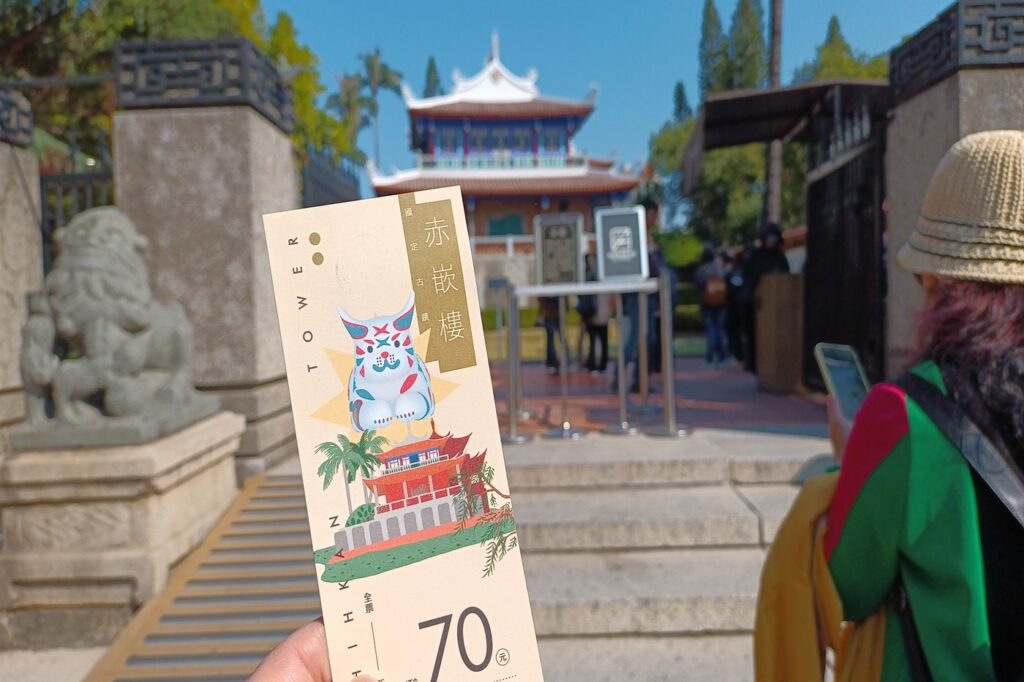
It I bought a ticket at the entrance. I saw many visitors inside, many of them looked travelling in group. There was a group of Korean tourists. I guess they were enjoying themself in this spring-like weather. Also, there were elementary school kids obviously in a field activity. I think those kids came here to study history of Tainan, or Taiwan. The Dutch colonized Tainan for 38 years, from 1624 to 1662. They built two trading posts in Tainan: Fort Zeelandia in 1624 (a.k.a. Anping Old Fort) and Fort Provintia ( a.k.a. Chikan Tower) in 1663. Taiwan became a trading place in East Asia to connect China, Japan and other Southeast Asian ports. The Dutch shipped spices, lead, tin, hemp, cotton and kapok from Southeast Asia to China through Tainan. They traded them with raw silk, gold, sugar and porcelain there and shipped them to Japan through Tainan. In return they bought silver and copper in Japan and shipped to Indonesia and even to Europe by way of Tainan. Deer skin and sugar were also exported from Taiwan. Tainan took important role in the trading. The area around was a part of inland sea when the Dutch built those forts. Fort Zeelandia was built on the tip of Tayouan Isle on the edge of the scenic Taijiang Inland Sea. Fort Provintia was on the mainland across the inland sea from Fort Zeelandia. Now they are connected by Minquan Road.
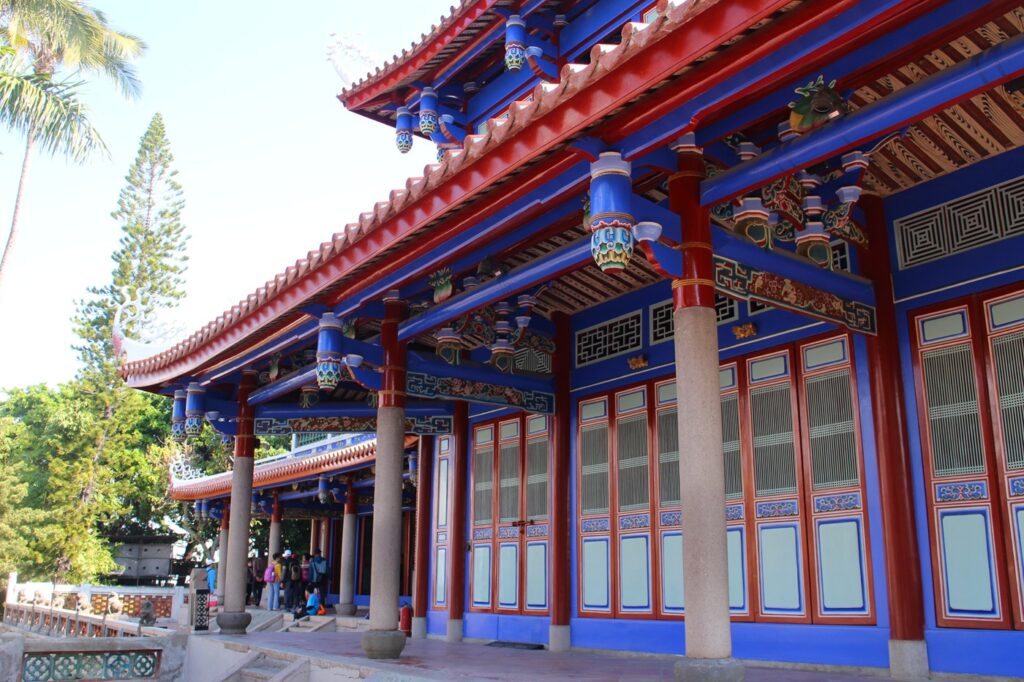
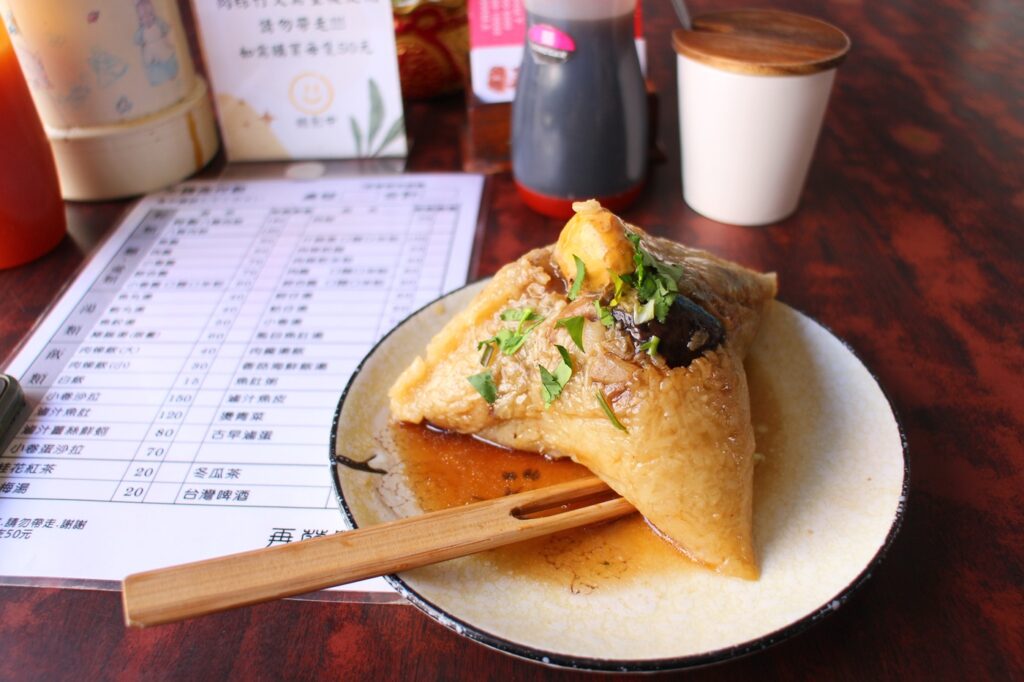
Chikan Tower is a Chinese style pavilions built on the foundation of the Dutch Fort Provintia. It was originally built as the Dutch administrative and military post in 1653, used as a fort after the Dutch were ousted by Zheng Chenggong in 1662. It was later reconstructed in the Qing Dynasty style in 1886. It is a fusion of European and Chinese cultures. It shows the complex heritage of Taiwan since the 17th century. There were some groups of elementary school kids in the precinct. I think they were on the field trip of the school. I think It is a pride of Tainan people and one of the must see and know as Taiwan people. Sunshine got strong and it got hot like early Summer. I decided it is time to go. I found a noodle shop of Dan-Tsu Noodles, or Dan Zu Mian across the road from the castle. Du Hsiao Yueh Danzai Noodles is a famous noodle shop. They serve a small-bowl dish featuring yellow egg noodles in a flavorful shrimp-based broth, topped with savory minced pork, garlic, coriander, and often a shrimp. But it is a bit early for Lunch. I decided I should come back later. I wanted to eat Zongzi Rice Dumpling or Chimaki in Japanese at Zaifahao first. I crossed the main street of Minzu road, walked down one block and turned left at Minquan road. Walking two blocks, I found Zaifahao next from Tianan Beiji Temple near Gongyuan road. I sit at a table in front of the shop and ordered a dumpling. The large dumpling of steamed glutinous rice contained seasoned fillings like an egg, shiitake mushroom, bomboo shoots, pork meats was served on my table shortly. It had sweet soy sauce taste. As often with the dishes of Taiwan, it tastes mild and not salty. It could be addicting. It was just NT$120. Taiwan’s food is very reasonable for a traveler from Japan like me.
Filling my stomach a bit, I started walking the streets of Tainan again. I walked the way I had come to Fort Provintia. I walked pass Chikan Tower and Du Hsiao Yueh Danzai Noodles towards Tainan Grand Mazu Temple. On the way, I found a temple of Taoism called Mijie Guang’an Temple. There are many temples of different belief. Tainan Grand Mazu Temple is a temple of another belief. Taiwan has a myriad gods of different belief like we do in Japan. I found temples of small and large here and there on the streets. Every temple has a constant of people who come to pray. I felt all of them are loved by local people.
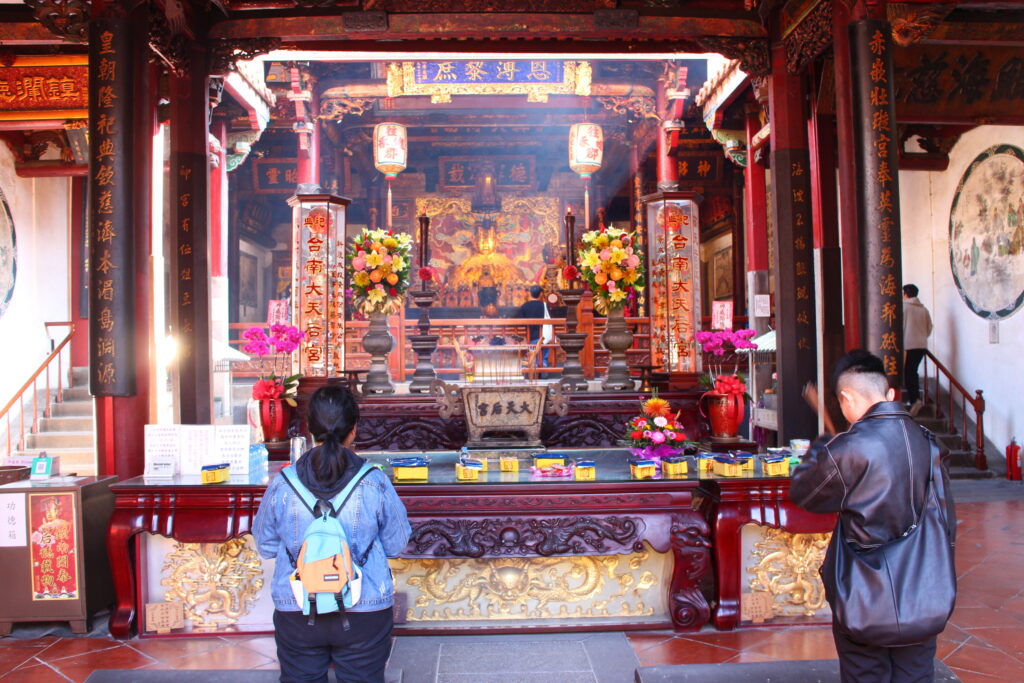
I wanted to visit Tainan Grand Mazu Temple. According to the Wikepedia, Mazu is a sea goddess in Chinese folk religion, Chinese Buddhism, Confucianism, and Taoism. She is said to have lived in Fujian, coastal area of mainland China in the late 10th century. After her death, people enshrined her as a tutelary deity of Chinese seafarer. Her worship has spread throughout Chinese coastal areas and Chinese communities in Southeast Asia. It is said you find Mazu Temple and Kwantai Temple where Chinese people live. We have a Mazu Temple back at my home town in Yokohama. This temple is larger than the Yokohama’s temple. I saw many devout people, young and old alike, are coming to pray. I felt the religions are important part of their lives. After visiting the temple, I walked to Shennong Street. Shennong Street is one of old streets in Taiwan. Old buildings over 100 years line along the street of some 1,000 meters. The street had been bustled as the center of distributions when there was a canal along the street.
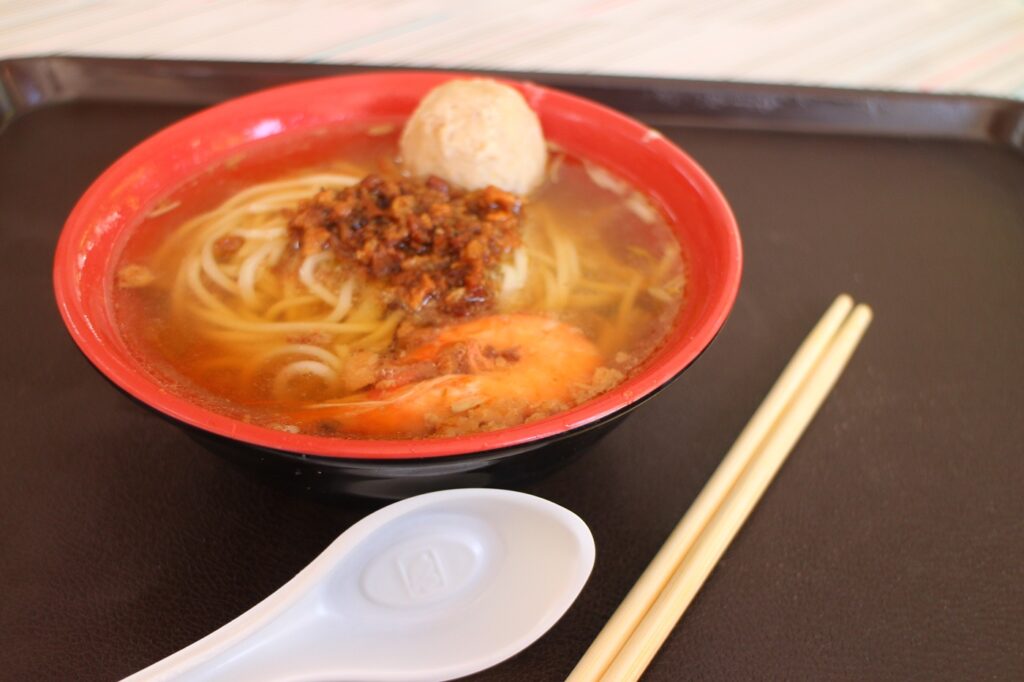
On the way back to Tainan station, I stopped by Du Hsiao Yueh Danzai Noodles across the street from Fort Provintia. It is around 2 o’clock. There was no one except a couple. I ordered their signature dish Danzai Noodle. A noodle with seasoned grilled pork, a ball of fish cake and a boiled shrimp is served in a small bowl. It may be a good as snack when you feel a bit hungry in the day. The soup was mild and not salty. The fish ball tasted good. The minced pork with fried onion and garlic went along with the soup well. I left the shop feeling good for the station. Later I found the description about the shop across the street from Fort Provintia on “Kaido-wo-yuku Taiwan Kiko”, walking the historical roads of Taiwan by Ryotaro Shiba. According to the book, painter and his travel companion Mitsumasa Anno had sit at a table and ate the noodle there some 30 years ago.